Friday, April 5, 2013

APOD 4.2

M64: The Black Eye Galaxy 
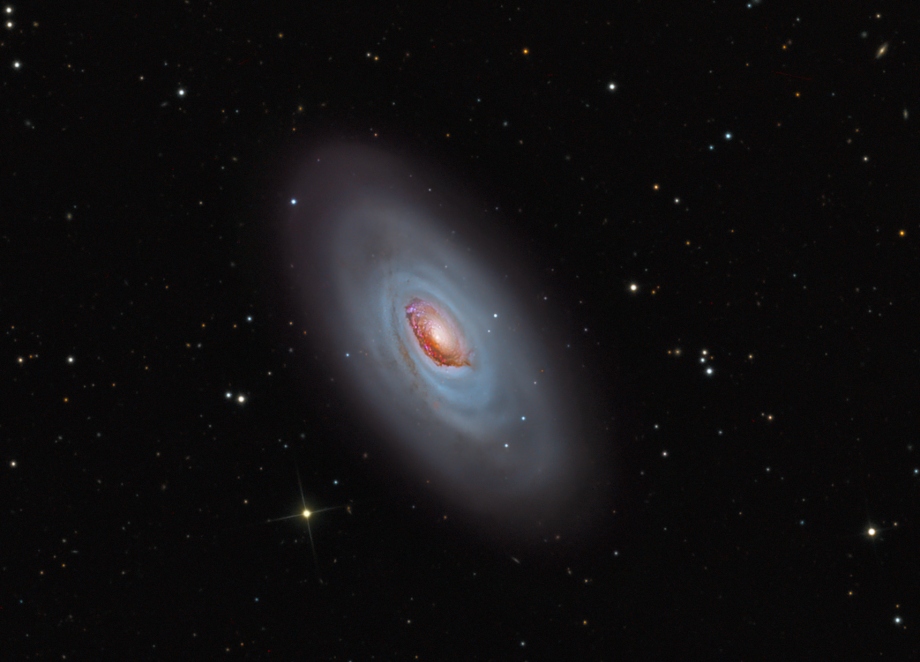
This image shows Messier 64, the Black Eye Galaxy. M64 is in Coma Bernices, around 17 million light-years away. The bright red central area of the galaxy is as such because of the existence of hydrogen dust clouds which are known for being star-forming. It is thought that The Black Eye is the result of a merging of two completely different galaxies, shown by the existence of two rotating star systems which seem to have collided since they rotate in opposite directions. 

Thursday, March 28, 2013

APOD 4.1

Waterfalls, Auroras, Comet: Iceland 
A truly unique photograph, this image shows fantastic terrestrial landscape along with a bright array of stars, auroras, and even the comet PANSTARRS. It was taken in southwest Iceland near the Gullfoss waterfalls. The comet is visible just about the horizon in the left, and can still be visible in the sky from the north. The bright auroras were caused by a solar flare and powerful CME which occured two days before the image was taken. 

APOD 3.8

Chelyabinsk Meteor Flash 
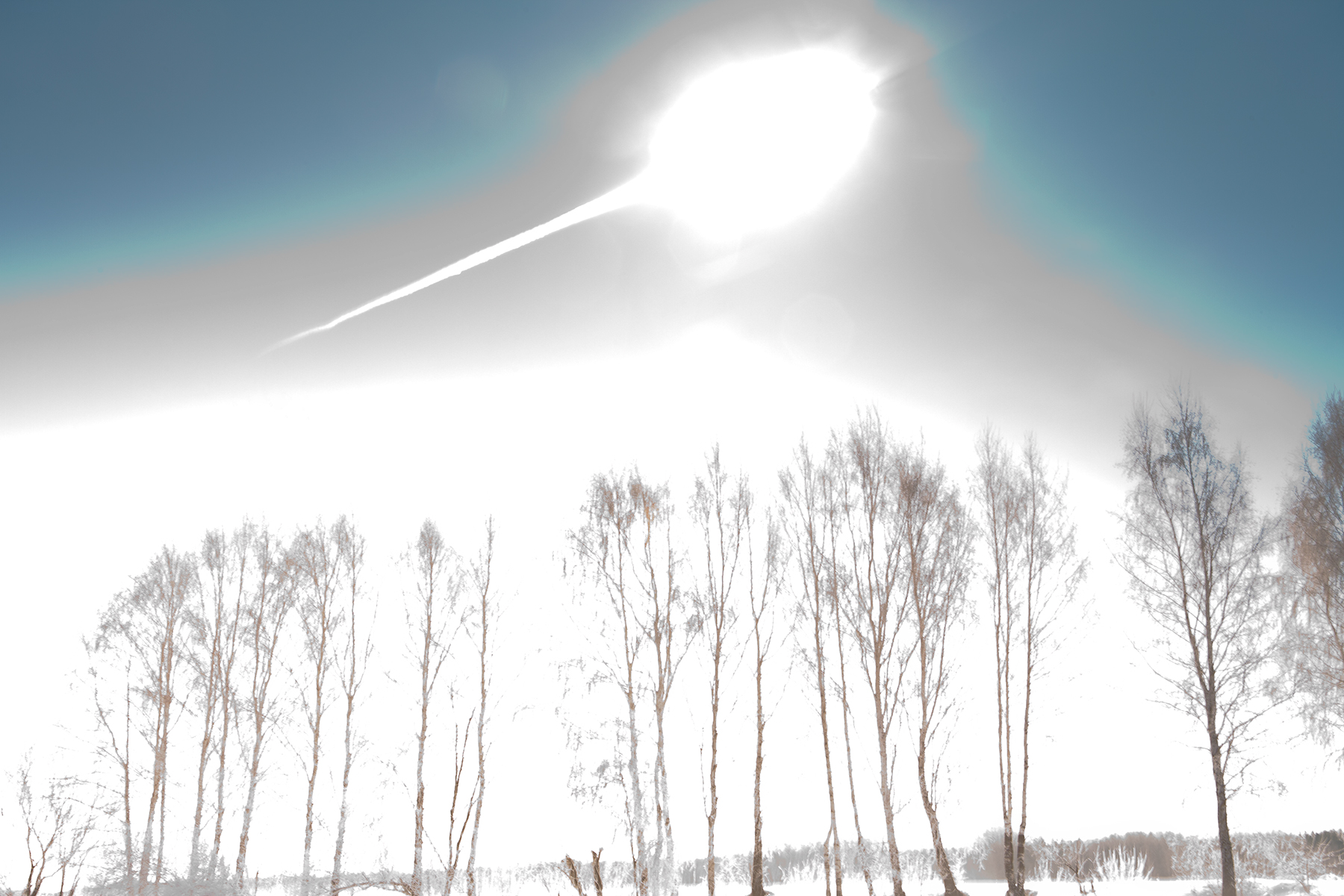
Photographed is the flash of the Chelyabinsk meteor which fell to Earth at 9:20am February 15. The meteor traveled around 20 km per second until making impact. It created a flash even brighter than the sun. This photograph was captured on accident as the photographer attempted to take photos of the snowy landscape. The meteor was 17 meters wide causing minor destruction in the surrounding towns, by releasing around 500 kilotons of energy. This is the greatest meteoric event since Tunguska in 1908. 

APOD 3.7

Curiosity Self-Portrait Panorama 
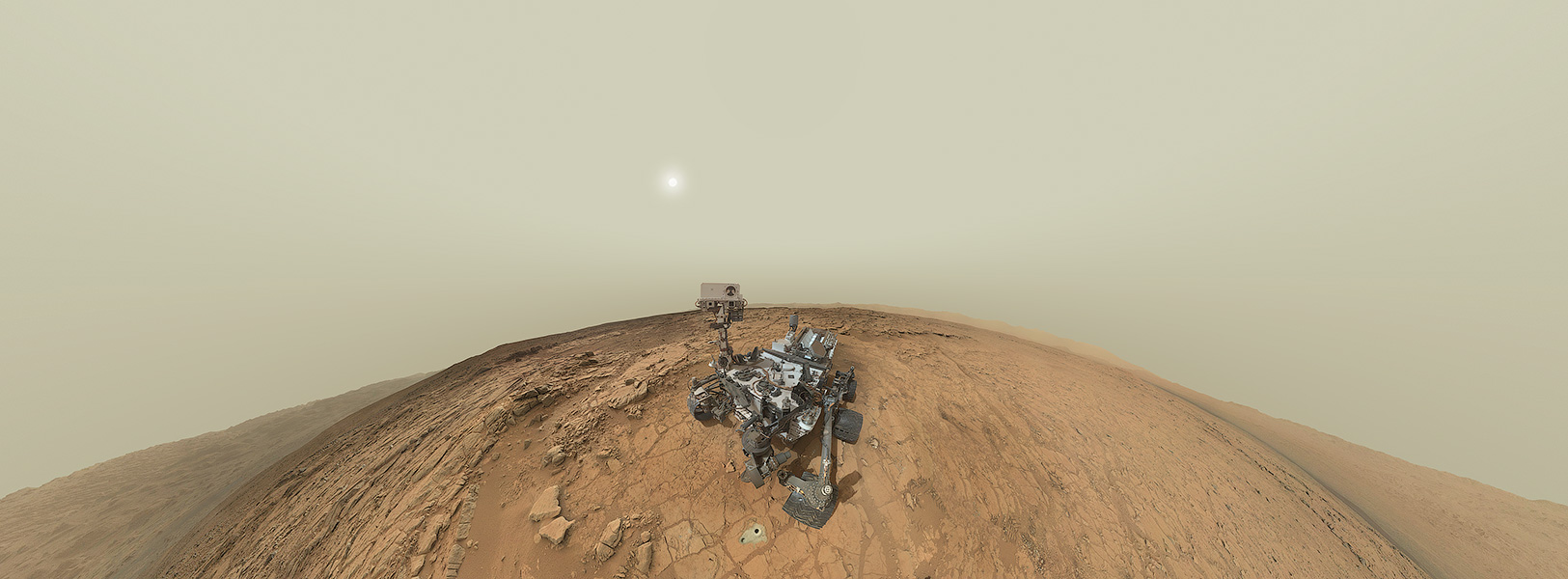
The Mars Curiosity Rover took an interesting and beautiful self portrait in the Gale Crater. This was the site on which Curiosity first started drilling into the rock. In the photo at the rover's feet, one can see a hole that was drilled to collect samples. The photo was pieced together with many images taken by two separate cameras which capture far or close-range images. He could photograph himself using a long arm which holds the far-range camera, which is not shown. 

Monday, February 25, 2013

Henrietta Leavitt Biography

     Henrietta Leavitt veritably revolutionized astronomy. She is one of the most influential astronomers in history, yet she is not remembered like Newton, Hubble, or Galileo, because she was lucky enough to be born female. Leavitt was born on July 4, 1868 in Lancaster, Massachusetts. She attended Oberlin College and Radcliffe College. She never took an astronomy course until her final year of college, but she was thoroughly intrigued. Following her graduation, Leavitt began working at the Harvard College Observatory. She was one of the many women hired as "computers" to catalog the brightness of stars as they appeared in the observatory's collection. At this time, women were not allowed to operate telescopes. She was instructed by her supervisor to begin cataloging variable stars, whose brightness would change over time.
     She worked hard, but was not expected to find anything, instead just hired to do work that the men didn't want. In fact, Leavitt would make a discovery that would change astronomy. In one study published in the Annals of the Astronomical Observatory of Harvard College, Leavitt noted that variable stars with greater luminosity had longer periods. She confirmed this by studying the Cepheid variables intensely, and realized that the relationship between period and luminosity was very concrete. The discovery is known as the "period-luminosity relationship" which says that the logarithm of the period s linearly related to the star's intrinsic luminosity. This finally allowed scientists to measure the distance to galaxies which were too far away to be computed through stellar parallax. Thanks to Leavitt's discovery, the distances to any Cepheid in the Milky Way could be determined with great accuracy. Later, Edwin Hubble used Leavitt's discovery to measure distances to Cepheids in the Andromeda Galaxy. Thus, Leavitt's discovery led to the realization that the universe is much larger than our Milky Way, and other spiral galaxies exist independently outside of our Milky Way. This discovery was one of the most revolutionary in history.
     In 1921,  Leavitt was made director of stellar photometry at Harvard. However, by the end of that year, illnesses which plagued her since graduating from college finally took their toll, causing Leavitt to die from cancer. She was buried in the Cambridge Cemetery. Other than making the most influential discovery in astronomy, she received many honors. She was a member of Phi Beta Kappa, the American Association of University Women, the American Astronomical and Astrophysical Society, the American Association for the Advancement of Science, and an honorary member of the American Association of Variable Star Observers.

APOD 3.6

Mercury on the Horizon 
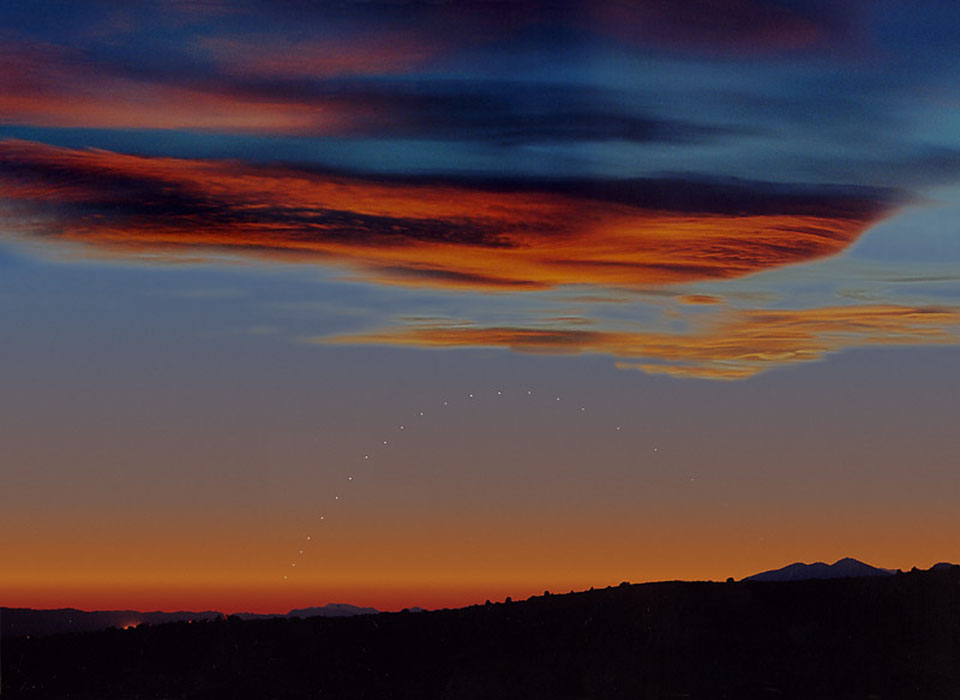
This image showcases a beautiful sky and the trail of mercury as it follows the sun, rising above the horizon and quickly disappearing. Mercury orbits very closely to the sun and therefore is only visible shortly after sunset or before sunrise for a short while.  It takes careful planning and finesse to follow Mercury during certain times of the year. Currently it will be visible in the western sky right after sunset, for the northern hemisphere. 

Henrietta Leavitt Biography: Sources


"Henrietta Leavitt." PBS. PBS, n.d. Web. 25 Feb. 2013. <http://www.pbs.org/wgbh/aso/databank/entries/baleav.html>.

Johnson, George (2005). Miss Leavitt's Stars: The Untold Story of the Woman Who Discovered How to Measure the Universe. New York: W.W. Norton & Company.

"Leavitt." CWP at Physics.UCLA.edu. N.p., n.d. Web. 25 Feb. 2013. <http://www.physics.ucla.edu/~cwp/Phase2/Leavitt,_Henrietta_Swan@871234567.html>.